


Some Practical Advice for Young Poets Considering Exile: Part 1
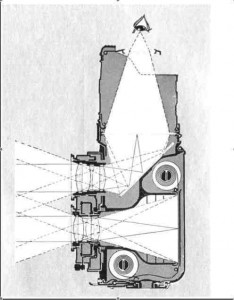
Perfect Parallax Correction
In my case it took almost two years of leaving and then returning, and then leaving once again to reach the point at which I finally gained what I would call a legal footing in Europe. In the midst of these two years (1984 - 1986) I even spent a week in China - an alternative to the European project - having planned for a year. It was a tumultuous period. I was arrested once in Paris and locked up in a classic gaol, the Conciergerie prison on the Ile de la Cité (exactly where, one hundred and ninety-one years earlier, in 1793, Marie Antoinette had awaited execution); on another occasion I was pulled off a train on the Swiss-Italian border and detained for several hours (both times for having been found to be in possession of illegal class-b drugs - the first time they were hid in my pouch of tobacco, the second time in my left sock); besides these mishaps, I was constantly dodging the gendarme’s check points in the Paris metro, due to my chronically defunct tourist visa. Even recently, I was nearly arrested in Frankfurt at a mid-airport Reisekontrolle, which seemed to loom up out of nowhere, because my Portuguese residence card was five years out of date.
After living in Europe for twenty-five years I feel quite at home. But I’ve come to realize that I will never feel quite so at home as I did in America before I left. Maybe this has to do more with middle age looking back upon youth, than it does with relative topographies. And yet, were I to return, there would be no possibility of feeling, in any sense of the word, at home in America, since the country I remember no longer exists. To survive this experience of limbo (of feeling more or less at home nowhere) I have had to construct a kind of internal, or personal country. In the following series of posts I would like to show young American poets considering voluntary exile just how this country of invisible borders and unlikely landscapes came into being and why a young poet, despite all of the difficulties of doing so, would want to live there.
We must first, however, deal with certain terminologies, namely the notion of exile and its related categories. North America (that is, the United States and Canada), European countries and a smattering of others around the globe are the only places on the planet from where one cannot, in the true sense of the term, be exiled. (It is only recently that the central and eastern European countries lost their ability to force exile upon their citizens, just as, in the mid 1970s, Portugal and Spain did.) In these fortunate places, a mere fraction of the planet’s populated surface, the only legitimate reason to assume the label of exile is if one has committed a serious crime, that is, exile as an alternative to incarceration (though in the eyes of the law you are a fugitive, a word which is derived from the Latin verb fugere; and cognate with the very common Portuguese verb fugir, to abandon a place rapidly and precipitately). In this case, there are a bevy of states to protect you, basically all of those which still have the capacity to force exile upon their own citizens. Often, when asked why I left America, I respond, ironically, tive de fugir - “I had to escape,” a “fugitive” from American poetry.
At any rate, the term exile is thus inappropriate for young North American poets. And yet, related terms (expatriate, immigrant, émigré) certainly fall short of describing the life of a young North American poet living abroad. I associate the term “expatriate” with high-earning employees of multinational corporations. Some of them, over the years, whether Europeans or Americans, have been my friends and this is the designation that they feel most comfortable with. Low-salaried teachers working abroad in private-sector language schools (some of the most likely employers) also favor describing themselves in this way. Politically, emotionally and materially the term “expatriation” is less freighted with the various connotations that accrue naturally to the term “exile”. It is a more neutral term that admits a certain notion of impermanence or transience. It contains no sense of rejection or formal removal from one’s country of origin. For its part, the term “immigrant” is at once too class-specific (in socio-economic or historical senses), that it also falls short of adequately describing the permanent state of cosmopolitan discomfort that poets living abroad feel. Immigration is driven above all by the economic realities that individuals face. In my case, I fled a life of certain prosperity for one of polite poverty. This was not immigration in any sense of the word. I simply began to wander, and when I found the conditions I thought conducive to a life of poetry, I settled.
Contrarily, the term “émigré” carries with it the historical weight of war, of migrations of communities and of the dissolution of erstwhile sustaining political systems. Émigrés (like immigrants/emigrants) are more apt to live in improvised communities rather than as individuals alone among (for them) foreigners. A classic example would be the Nabokovs, who fled the Bolsheviks along with a range of Russians of various political stripes, many of them from the middle and upper classes. There is a lovely, albeit exaggerated, description in Speak, Memory, of Vladimir and his father above deck, as the family fled Sebastopol on the last ship, playing chess, under a hail of bullets directed at their fleeing vessel. Though he was fluent in English and French by the age of seven (not nearly so in German, which by his own admittance he never properly mastered), his early literary career was conducted, first in Berlin, then in Paris, in Russian and directed at a Russian émigré audience. Nabokov, like many of his cosmopolitan contemporaries (Walter Benjamin for one, who wasn’t quite as lucky) can claim the double status of having graduated from émigré to exile; in Nabokov’s case, this was an unparalleled bit of good fortune for the novel in English. After fleeing the Bolsheviks, he was then forced to flee the Nazis (his wife was of Jewish descent). His émigré community quickly became a thing of the past in Wellesley, Massachusetts.
You might wonder why I am harping on designations, why I needed to classify myself. It is because of the sheer transformative nature of the move. Even if you are unpublished and unknown as a poet, just engaging in such an activity, adds, unlike being, say, an air traffic controller does, a public layer to your private layer. I needed to find some label for this, especially since I was abandoning the community of poets (the early 1980s community in New York) that had sustained me. I was in subtle ways rejecting them. Though they didn’t need to be rejected, and certainly didn’t know they were being rejected, I needed a label that would legitimize what I was doing, something that would carry the punch of Robert Graves’ title Good-by To All That.
So, let me tell you how things panned out as a voluntary exile, and how this led to my oxymoronic life abroad.
In terms of employment, sustenance, legality, housing, etc., I kind of just rode the curve. My first strategy, once I had established myself in Paris, on my flimsy tourist visa and in my dear friend Pontus’ atelier, was to return to New York whenever I ran out of money, work for a couple of months, a semester here, a restaurant gig there, and then return to Paris on a refreshed visa and never more than a thousand dollars in American Express traveler’s checks. That went a long way, since I had learned quickly how to survive on a few francs per day. I paid Pontus a nominal rent, the electricity came in through an illegal feed, I never used the telephone, ate vegetables, rolled my own cigarettes and spent my days reading and writing in the public library at the Centre Pompidou. Finally I got a teaching job at a private language school and was paid under the table. I nearly snagged a job which would have kept me in Paris at the American University, but I ran into that familiar “catch-22”: to get the job I needed to have working papers and to get working papers I needed to have a job. What I would like to suggest is that the material part of eloping with oneself was the easy part. The nuts and bolts of it would be different today. My escape was analogical, yours will be digital. That, in itself, will make a huge difference. Though it is comforting to know that our operating system is still not purely digital. We still need ADCs for everything, analogue to digital converters. And all exiles, whether voluntary or otherwise, should be happy to note that the technology to overcome converter nonlinearities, is called “Dither”.
It was the emotional (and since I had reached the stage of self-apprenticeship) the literary consequences which were more deeply problematic. I will take these difficulties up in part two.
Martin Earl lives in Coimbra, in central Portugal. From 1986 until 2001 he lectured in English, translation...
Read Full Biography