
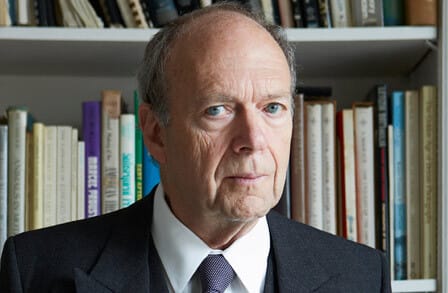
POET

Frederick Seidel (1936 - )

BIOGRAPHY

Rarely has a poet's first book created as much controversy as Frederick Seidel's Final Solutions. As William Jay Smith noted in Harper's, "Mr. Seidel's first collection has already caused quite a stir, largely because it was banned even before publication, a distinction that few poets achieve." The book was awarded a literary prize, but the prize was withdrawn when the poems were judged to be libelous. Seidel, according to Smith, "attempts the grotesque on a grand scale . . . and at times he succeeds. . . . [But] the failure of much of Mr. Seidel's book for me lies . . . in the lack of . . . adequate images, in a too heavy reliance on Robert Lowell's meters, and a theatricality that . . . does not ultimately ring true."

Several reviewers have commented on the similarity of Seidel's poetry to Robert Lowell's, especially in regards to style and meter. "In Frederick Seidel's case," James Dickey wrote in the New York Times Book Review, "his relationship to the poetry of Robert Lowell amounts not so much to influence as to slavery. The diction is the same as Lowell's, as are the historical references, and the inflated, hortatory style." In a review of Final Solutions, Dickey concluded: "Imitation and shock tactics are no substitute for personal creativity. . . . Mr. Seidel's talents are by no means imposing." In a review of the same collection for Book World, Charles Berger found that "Seidel seems to have been testing the premises and the ordinary language of poetry. . . . The result is an extremely savvy book of poems, reminiscent of Lowell as social prophet, but without the latter's deep moral affiliations." And Denis Donoghue, reviewing Sunrise for the New York Review of Books, believed Seidel is "loyal to his first book, as well he may be. Even then he had a gift of style, though in some poems it seemed mostly a gift of Robert Lowell's style. . . . A remarkably gifted and serious poet, [Seidel] gives me the impression, in some poems, of having lost or given up his confidence in the official forms seriousness has been supposed to take. . . . Despite that, Sunrise is an even stronger book than Final Solutions. Seidel's voice is now securely his own. . . . 'The Soul Mate' is the most beautiful poem in the book, a love poem as touching as anything I have read in years."

Despite the influence of Lowell, Seidel speaks with a unique voice. His poetry is intense and pessimistic, born of a "sensibility made raw by experience, uneasy by history," William Logan wrote in Library Journal. Reviewing Sunrise, Logan commented, "Beyond the small tragedies of personal life he finds the mocking disasters of the great, from Vietnam to our assassinated presidents, and with an ear for the flux of literature and politics he exploits their varied mythologies." In a review of Final Solutions for the New Yorker, Louise Bogan stated: "Seidel is angry, and his anger, ultimately, is directed less against evils apparent in this or that person or society than against the basic stupidities and depravities of mankind itself. . . . The terrifying aspects of the experiences he describes are outlined with clinical precision. . . . Whether or not Seidel's talent will come into the full power it now suggests it is impossible to predict. But how extraordinary if it should." Stephen Stepanchev, in a New York Herald Tribune Books article on Final Solutions, felt that in Seidel's poetry "the world seems a place of predicaments of cruelty and madness. . . . But the structure of the poems is relatively weak and tends to disintegrate in the 'meaninglessness' that is at the center of the poet's vision." And Jerome Mazzaro said of Seidel in a review of Sunrise for the Hudson Review: "Writers know the power of words, and . . . Seidel is not beyond painting a desert to get his effects. Readers have only to turn to '1968,' 'Men and Women,' 'Wanting to Live in Harlem,' and the title poem to recognize the importance of Seidel's concerns and talent and be reassured that, although not now venturous enough, Seidel has the power to be an important visionary."

Seidel's Sunrise was accorded some impressive literary honors, including the 1981 National Book Critics Circle award for poetry. He continued to publish just a few volumes every decade, continuing with Men and Woman: New and Selected Poems from 1984. In 1989, two collections came forth: Poems, 1959-1979, an assemblage of previously published work, and These Days. Don Stap reviewed the latter, which contained new work, for the New York Times Book Review and found it consistent with Seidel's poetic style of previous works, featuring "social prophecy and private anguish in highly literate, formal, often enigmatic poems." In These Days, the poet uses modern history for inspiration, touching upon such events as the death of the Shah of Iran from cancer or the Russian civil war of the 1920s. Stap termed some of the later poems in the volume unsuccessful, however. He described them as delivered by a voice "suffocating in a private malaise . . . [that] can only record confusion and distress." The final poems, noted the critic, "have no weight, no center, nothing to hold onto."

Seidel published another collection, My Tokyo, in 1993, and ended the decade with Going Fast, which appeared in 1998. In the latter, the poems are nostalgic, and their creator pines for the Manhattan of the 1950s, lyricizing vintage objects like steakhouses and damask. Again, famous names crop up, among them assassinated Israeli leader Yitzhak Rabin, and recent events, like France's controversial decision to begin nuclear testing in the South Pacific in the mid-1990s. He imagines space, and an astronaut out on a walk whose tether is cut when his companions must suddenly abort their mission. "To a great extent, 'Going Fast' is concerned with endings and mourning for a less technocratic world," noted New York Times critic Melanie Rehak, and commented elsewhere that Seidel's Gotham "becomes 'an onion-domed metropolis' on a winter night, the city evoking church towers and snow globes at once—a miniature of preserved perfection and devotion." Rehak found some poems in Going Fast less successful in conveying the poet's trademark cynical ire; at other moments he rhapsodized about shoes made by hand in Paris and a vintage Italian motorcycle. "But when he aims well, Seidel is nervy and dark," Rehak wrote. David Wojahn reviewed it for Poetry, and stated: "In the best poems of Going Fast Seidel has created a sort of anxious elegy for this century which evokes the cinematic visions of [Italian director Bernardo] Bertolucci and the early [French New Wave films from Jean-Luc] Godard." Wojahn contended that "Seidel has over the years grown increasingly mordant, dyspeptic, and misanthropic, even as his accomplishment has deepened," and declared him "among the finest poets at work today."

Seidel's place in contemporary American poetry was honored by an invitation from the American Museum of Natural History to contribute verse for a limited edition volume to commemorate the opening of its new planetarium in 2000. The Cosmos Poems, at a cost of $100, also included full-color lithographs by German artist Anselm Kiefer complementing thirty-three of Seidel's new poems. All are paeans to the universe, science, and the wonder of nature. A Kirkus Reviews writer singled out poems like "Supersymmetry" and others "that express childish delight and awe at the marvelous workings of the universe."

In 2001, Seidel published Life on Earth, the second in a planned trilogy that began with The Cosmos Poems. In the thirty-three poems contained in the book, Seidel spans history and touches on subjects from Joan of Arc, to the Nazis, to Hollywood, and to spaceships. In Library Journal, Fred Muratori wrote, "He populates his tersely metered . . . images taken from Geography, history, pop culture and, most importantly, the body itself." In Booklist, Donna Seaman felt that Seidel's poems reach, "Into the realms of whales, spaceships, and, the greatest mystery of them all, the human heart."

CAREER

Poet, c. 1963—. Occasional lecturer, Rutgers University, 1964—.

BIBLIOGRAPHY

POEMS
  • Final Solutions, Random House (New York, NY), 1963.
  • Sunrise: Poems, Viking (New York, NY), 1979.
  • Men and Woman: New and Selected Poems, Chatto & Windus (London, England), 1984.
  • Poems, 1959-1979, Knopf (New York, NY), 1989.
  • These Days: New Poems, Knopf (New York, NY), 1989.
  • My Tokyo: Poems, Farrar, Straus (New York, NY), 1993.
  • Going Fast: Poems, Farrar, Straus (New York, NY), 1998.
  • The Cosmos Poems, pictures by Anselm Kiefer, Farrar, Straus (New York, NY), 2000.
  • Life on Earth, Farrar, Straus (New York, NY), 2001.
Paris Review, Paris editor, 1960-61, advisory editor, 1962—; author of screenplay for the film Afraid of the Dark.

FURTHER READINGS

BOOKS
  • Contemporary Literary Criticism, Volume 18, Gale (Detroit, MI), 1981.
PERIODICALS
  • Book World, July 6, 1980.
  • Booklist, April, 1998, Donna Seaman, review of Going Fast, p. 1295; March 15, 2001, Donna Seaman, review of Life on Earth.
  • Harper's, September, 1963.
  • Hudson Review, autumn, 1980.
  • Kirkus Reviews, February 15, 2000, review of The Cosmos Poems, p. 209.
  • Library Journal, March 1, 1980; March 1, 1998, Rochelle Ratner, review of Going Fast, p. 92: February 15, 2001, Fred Muratori, review of Life on Earth.
  • Lingua Franca, May, 2000, "Unsung Poets."
  • New Criterion, June, 1998, William Logan, "Soiled Desires," p. 61.
  • New York Herald Tribune Books, August 11, 1963.
  • New York Review of Books, August 14, 1980, Denis Donoghue, review of Sunrise.
  • New York Times, July 19, 1998, Melanie Rehak, "Our City of Light."
  • New York Times Book Review, September 1, 1963, James Dickey, review of Final Solutions; September 21, 1980; October 14, 1990, Don Stap, "Screams beneath the Snow," p. 20.
  • New Yorker, October 12, 1963.
  • Poetry, July, 1999, David Wojahn, review of Going Fast, p. 219.
  • Publishers Weekly, February 23, 1998, review of Going Fast, p. 68; January 10, 2000, review of The Cosmos Poems, p. 60.

MORE INFORMATION

Translations

First appeared in Poetry = First appeared in Poetry magazine.

Mu'allaqa (Translator's Notes)

ARTICLES ABOUT FREDERICK SEIDEL

So Goddamn Glamorous
by Michael Hofmann
Frederick Seidel is a meat-slicing machine.

BOOKS

Ooga-Booga
(Farrar, Straus & Giroux)
BUY THIS BOOK »