


Maggie Smith's Good Bones Reviewed at The Rumpus
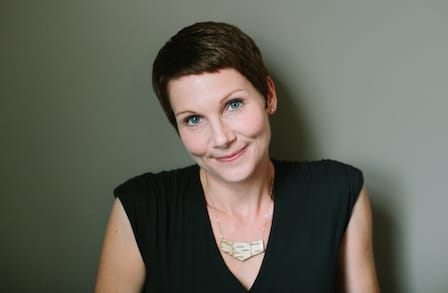
Julie Marie Wade reviews Maggie Smith's Good Bones (Tupelo Press, 2017) for The Rumpus. Wade considers the moral of the story (poem): "I think if the book called Good Bones has a moral, it’s about learning to grow where planted," she writes. More:
...It’s also about learning how to look danger in the eye, how to acknowledge the thing that wants to stop us—uproot us, undo us—and then refusing to let it. “Nothing predates danger,” Smith writes, not even the orchard with its smooth, skippable stones, its tranquil lakes, not even November 7, 2016. “There is no such thing as safety,” she writes in a subsequent poem, “only survival and the absence / of survival.” And just when I’m about to ask how we survive—leaving or staying?—how both can be right while both test the limits of right?—I spot the next poem in the bread-crumb trail this poet has left behind. It’s called “If Anyone Can Survive,” with a comma that’s part of the title: another toothsome crumb I soon commit to my mouth.
Here Smith writes, “If anyone can survive, // it’s the motherless children in my daughter’s books, / orphaned or abandoned or garden-variety alone.” In one way, this is a poem about resourcefulness in the face of calamity—“They’ve learned/ to sew their own clothes from rags”—a lesson as much for citizens of our cultural moment as for children of any Once Upon a Time. In this poem, the stone is repurposed as the orphans “strike rocks / into fire.” In this poem, the lake transmutes into a waterfall behind which orphans store milk “so it doesn’t sour.”
In another way, this poem is about allowing oneself not to be the hero—not to presume you always have the answers, the quick fix or even the slow, measured solution. Our poet-speaker told us early on, “I’m your guide here,” in which we as readers are allied with the “you” but are not exactly the “you” either. This “you” is the poet-speaker’s child. “I’m desperate for you / to love the world because I brought you here,” she says. We hear a mother speaking, the same mother who will later contemplate her child’s storybooks and conclude: “what matters / is the mothers, who must be dead for any rising / action to happen. Nothing is as freeing as grief. / Motherless children—what do they have to lose?”
Read the full review here.