


A Poet of Magnitude and Intimacy: On Linda Gregg
Gregg lived as she wrote, winnowing down life to bare essentials, which, in turn, made space for the visionary to reveal itself.
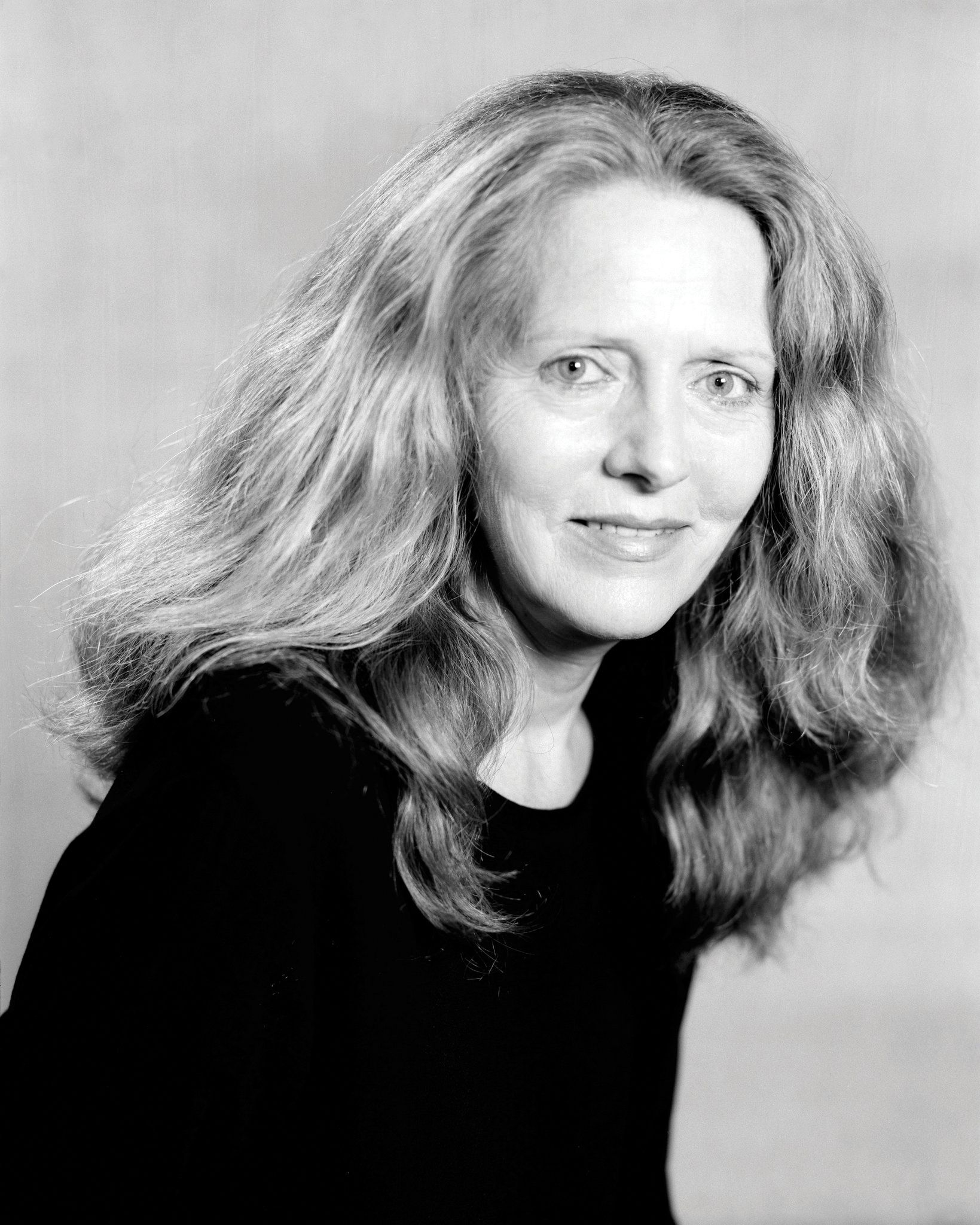
Linda Gregg, circa 1999. Photograph by Hal Lum. Courtesy of Graywolf Press.
Linda Gregg and her poetry were one. Poetry seemed to emanate from her, to surround her like an aura. I observed this firsthand. She was my teacher, initially at the 92nd Street Y Poetry Center, and, shortly afterward, at Columbia University’s graduate creative writing program. Both inside and outside the classroom, Gregg was a thrilling mentor. She did not just ponder the technical aspects of a poem—she would explore with a student if the complex depths of a poem had been reached, or if the poet could go further. Sometimes she would tell her students to take their poem, turn it over, and, without looking at what they had written previously, write the poem (again). They contained the poem, she felt, and the pure poem would surface.
Over the years, as our friendship grew, Gregg conveyed in countless conversations the beliefs that she held as a writer. One idea Gregg kept front and center was that, as she stated in an unpublished essay, “my life and my poetry are married together. My poetry is lived. From the very beginning, language for me was about something seen, something believable.”
Born as a twin on September 9, 1942, and with two older sisters, Gregg’s childhood and its Edenic northern California landscape reverberated throughout her work. Despite her love of learning, schoolwork was a challenge for her. Elements related to language skills (such as spelling, punctuation, and the pace/fluency of reading) were a source of anxiety. (Dyslexia also ran in her immediate family.) Gregg persevered and enrolled in college at San Francisco State in the early sixties, where she studied with the seminal poet Robert Duncan and with Jack Gilbert, who had just won the Yale Younger Poets Prize for Views of Jeopardy (1962). In Gilbert, she found someone, in regards to her poetry, whom she trusted and respected. The two poets were different in the way they approached writing, yet they complemented each other. Gregg’s poetry had an ineffable quality, a magic in it, Gilbert felt. Gregg found Gilbert’s way of working derived from his profound intellect. The two remained lifelong friends and continued a conversation about poetry for the next half a century.
When she received her undergraduate degree in 1967, San Francisco—along with much of America—was going through tumult and growing pains. Gregg and Gilbert chose to head to Europe to concentrate on contemplative living and writing. (Although never legally married, she and Gilbert referred to their relationship, on occasion, as a marriage.) With little money, the pair settled into a Spartan existence for stretches of time on Greek islands. Of those days, Gregg would recall making lentil and barley stew to last for the week. During this approximate five-year odyssey, she carried only two books—The Oxford Book of English Verse and Ezra Pound’s The Cantos. On why Greece was chosen, Gregg offered, “There are gods in that earth ... It was possible in Greece to get very close to the actuality of the physical world ... get close to being what alive is.”
After separating from Gilbert, Gregg returned to San Francisco in the early seventies to live alone on Potrero Hill and attend graduate school at San Francisco State. She completed a creative thesis of poems, Part by Part, in May 1972 and received a Masters of Arts degree in 1975. Many of the thesis poems had been composed during her time in Greece, where Gregg had honed her poetic voice and tightened her writing style. Gregg developed a rigorous writing routine while she and Gilbert lived abroad, one that she would keep up for most of her later writing life: Gregg would work on poems seven days a week from morning until three in the afternoon, with only a small break for lunch. Poetry was always a true vocation, she deemed, and not a profession to secure financial gain.
From the magazine:Too Bright to See
where my hands pull weeds around the Solomon’s seals.
I see…
From the magazine:Let Birds
in the summer morning mist.
The night sky blue.
Me like a mare let out to pasture…
From the magazine:The Singers Change, the Music Goes On
No world is lost in the stories.
Everything is lost in the retelling,…
Starting in the mid-seventies, Gregg’s poems began appearing in national periodicals. The New Yorker accepted several. Antaeus, The Paris Review, The Nation, The Kenyon Review, and Ploughshares also welcomed her work. With her career building momentum, Scott Walker, cofounder of Graywolf Press, acquired Gregg’s first collection, Too Bright to See (1981). Over the course of her life, Gregg published seven books, including a new and selected volume, where readers can encounter her poetic voice—a near-match to her actual speech in its patterns and delivery, observations and gravity. “I use ... both abstract statement and image,” she noted, “and it’s important to remember that a statement can have a wildness that’s as good as an image.” Gregg’s supreme commitment to poetry leaves a legacy for others to follow. A path where the majesty of the natural world has its counterpoint in a respect for common objects and daily tasks, where careful observation can lead to unexpected inspiration, and where poetry deepens and enriches one’s lived life. She passed away on March 20, 2019, in Manhattan.
Hers is a poetry of magnitude and intimacy. Revelations attained from a lifetime of pursuing, along with poetry, her trinity of touchstones—the sacred, romantic love, and nature. Gregg lived as she wrote, winnowing down life to bare essentials, which, in turn, made space for the visionary to reveal itself. Linda Gregg’s poetry is unflinching, luminous, and essential. As she wrote earnestly in her essay “The Art of Finding,”
I believe that poetry at its best is found rather than written. Traditionally, and for many people even today, poems have been admired chiefly for their craftsmanship and musicality, the handsomeness of language and the abundance of similes, along with the patterning and rhymes. I respect and enjoy all that, but I would not have worked so hard and so long at my poetry if it were primarily the production of well-made objects, just as I would not have sacrificed so much for love if love were mostly about pleasure.

Linda Gregg during one of her stays in Greece. Courtesy of Louise Gregg.

Linda Gregg, circa 1999. Photograph by Hal Lum. Courtesy of Graywolf Press.

Artwork by Linda Gregg created on the Greek island of Thira (commonly known as Santorini) from October 7, 1970. (Monolithos is a village and a volcanic sand beach on the east coast of the island.) Courtesy of Louise Gregg.

Artwork by Linda Gregg of olive trees in Greece. Courtesy of Louise Gregg.

Valentine’s Day card made by Linda Gregg for Jack Gilbert. Valentine’s Day was Gregg’s favorite holiday. Courtesy of Louise Gregg.

Stew Recipe from Linda Gregg Papers. Courtesy of David Semanki.
This essay is part of the folio “Linda Gregg: Never Give Up Longing,” curated by David Semanki. Most of the quotes from Gregg in this introduction come from “Linda Gregg: An Interview” by David Wojahn, Poets & Writers, November/December 1991. One quote is from Linda Gregg’s unpublished essay “About Love Poems That Are Love as a Mountain,” found in Gregg’s papers at Emory University. The final quote is from Gregg’s “The Art of Finding,” which first appeared in American Poet: The Journal of the Academy of American Poets, Spring 2001.
The editors would like to thank David Semanki for his work compiling this folio and Louise Gregg for providing additional biographical information about her sister for Semanki’s introduction.
Read the rest of the folio in the April 2026 issue of Poetry.
David Semanki is the literary executor for the estate of Linda Gregg. He is the author of Ghost Camera: Poems (2024).