


On Fear: Radiant and Brimming
Where my ex deemed me unmaternal because of my writing, the opposite is true: I’m no good to anyone if I don’t preserve this one thing for myself.
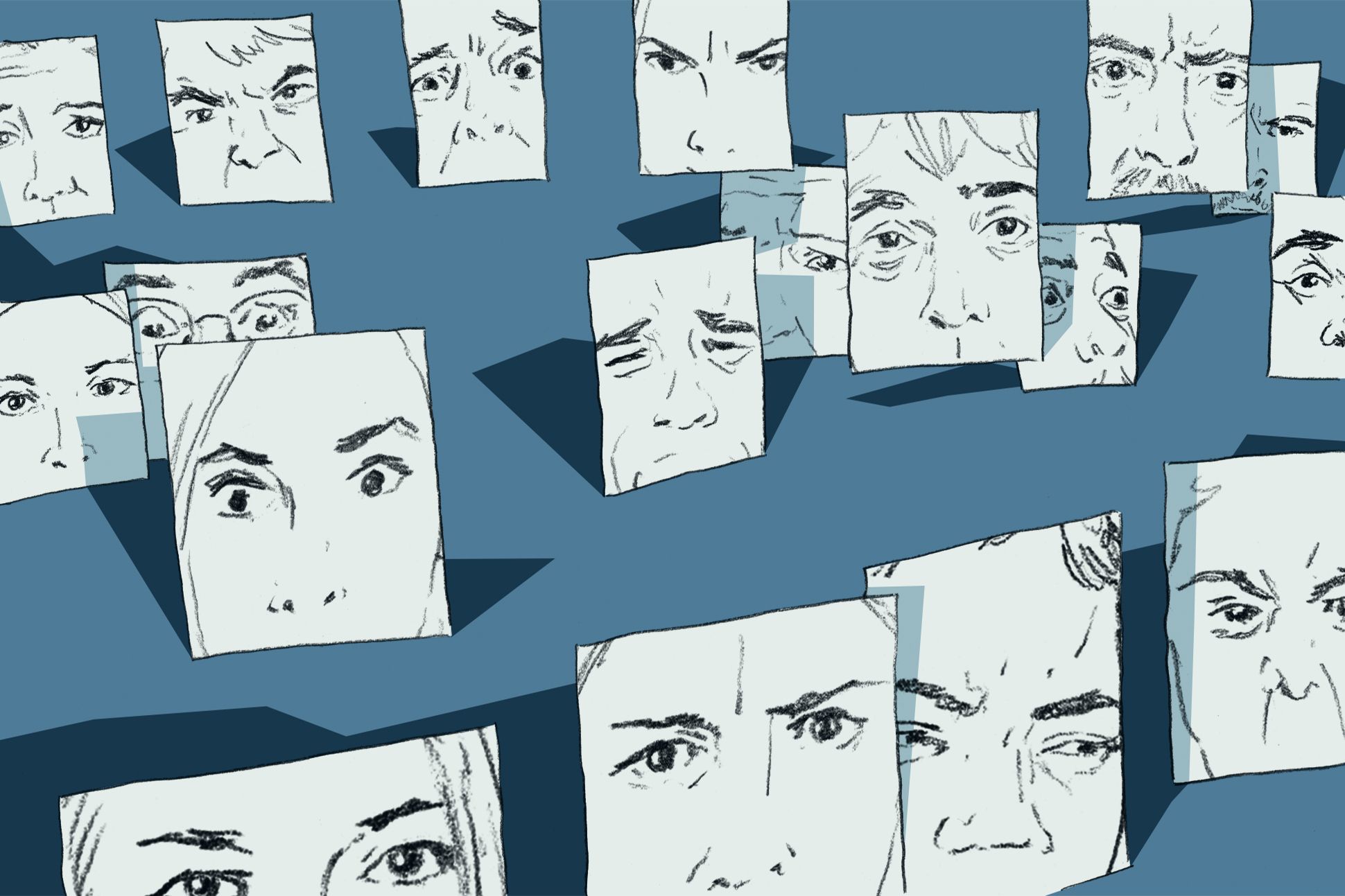
Art by Tim Bouckley.
The first thing I felt wasn’t any emotion I could identify, only the jackhammer of my heart. Though it was late June, I couldn’t stop shivering. The sun streamed through our row home’s bay windows. Bright. Engorged. In another room, my husband hummed, answering a flurry of emails pertaining to his band’s upcoming tour. He would leave in the morning for three weeks, and I was pregnant in an unfamiliar city we’d moved to only a month before. We’ll laugh about this later, I told myself as I walked down the hallway to tell him. This will become the story of how-we-found-out. We were pregnant and then Dan left. What a riot, I could imagine myself writing. What an absolute scream.
____
I never intended to leave Iowa City, where I’d lived for the past decade. Sometimes I saw more deer in a day than I did people. I wrote three books there over many harsh winters. Sometimes I let myself in through the back door of my best friend Anna’s home and slept on the couch while she and her son dreamed upstairs. I knew every dive bar of that town and the sprawling prairies beyond its limits. But then Dan and I fell in love, and he told me he wanted a family. For the first time in thirty-six years, I could imagine that future.
Now I lived on a block where trolleys clanged down Baltimore Avenue and concerts blasted from the park. There was a stack of prenatal vitamins in the kitchen and a squeezed-out tube of fertility lube by the sink. I was wildly happy and terribly lonely. But the morning after we found out we were pregnant, those feelings metastasized. I was fucking terrified.
____
I’d spent my entire adult life trying not to get pregnant so that I could be a writer on my own terms. There were the years of birth control, the various visits to CVS for Plan B. There was the last boyfriend who refused to get a vasectomy though he adamantly did not want children. There was the boyfriend before him who told me I’d be a terrible mother because I was too focused on my work. And though Dan and I desperately wanted this baby, the size of a poppy seed splitting through me, I was scared before I even named my fear: being a Bad Mom.
You will be, my friend Nina replied without hesitation when I confessed this worry. We all are, at one point or another.
You’ve got this, Anna reassured me over the phone later. You’re going to be great.
Yet, the poets I returned to were mothers who were not considered great: Sylvia Plath, Anne Sexton, Tove Ditlevsen—they abandoned their children out of financial precarity, addiction, or mental illness. And while I worried that I would leave, or fail, or disappoint my child in a million unforgivable ways, I hadn’t anticipated another fear that pregnancy delivered almost instantly.
“This is why you were born: to silence me,” Louise Glück declares in “Mother and Child.” Here was my harbinger. When I got pregnant, the first thing I lost wasn’t my appetite or my waistline—it was my desire to write.
____
Where once my brain teemed, now there was just a wordless expanse of nothingness that stretched into The Land of No Ideas. I sat in front of my notebook day after day until I could no longer bear the void. Then I shoved the notebook into the furthest corner of my desk drawer and welcomed the throbbing numbness of endless hours of reality TV. “I don’t want to talk about it, it’s a disease,” Lenù says of her pregnancy in Elena Ferrante’s The Story of a New Name. “I have an emptiness inside me that weighs me down.” The closest comparison I could make to that “emptiness” was depression. But fear is sharp, tannic. I could not wash its taste out of my mouth. Those first few months, I lived in a constant state of high alert with nowhere to rest that terror that also “weigh[ed] me down.
____
In October, Anna started periodically emailing me poems. As if she knew I had only to read her attempts to begin my own. During a bout of insomnia, I reread “Owl” from her collection Long Exposure:
We are afraid of sex now. I no longer offer
myself to you in the morning because there
is no morning, no body to offer.
Later, the poem ends.
I’ve forgotten what to do when I am alone.
I carry water in a glass cup. I think of ways
to kill the owl, ways to make myself come,
but don’t.I peek at the baby and wish he’d start crying.
I could make him stop.
In “Owl” there “is no morning,” only night. Such darkness presents the possibility of sex or violence. But the speaker sees beyond those provincial pleasures. The final couplet inverts our expectations of a postpartum mother (how often have I misread the penultimate line as “I peek at the baby and wish he’d stop crying”?), and ends, instead with a desire that is at once a threat (how might the mother make the baby stop crying?) as well as an assurance (the good mother is inextricable from the promise of peace). Reading “Owl,” I understood myself as a mother who similarly might straddle chaos and calm, a writer who might also forget what to do when she is alone.
____
Perhaps part of my paralysis surrounding writing is that I have to learn a new vocabulary for this new experience. Where my ex deemed me unmaternal because of my writing, the opposite is true: I’m no good to anyone if I don’t preserve this one thing for myself. To write will always take time, solitude, and ever ongoing work. I know at least this. And in writing, if I am truly honest, I will not always see the light in love or parenthood. I will sometimes be a Bad Mother, both on the page and off.
____
Over the past week, I’ve begun writing to my baby. The poems are short, breathless, sharp flashes of clarity in the otherwise dim chambers of my thoughts. Sometimes the poems are not particularly kind. I do not yet know how to address my child, as Anna does in “Force Majeure”: “I have wasted your childhood,/photographed you too much ... You assure me you will find/me in the next life,/and the one after, that no other/mother will do.” These emotionally capacious lines allow for a duality of guilt and innocence. Whereas the mother in this poem can see only her failures, the son promises that both of them are eternally bound in the dyad of parent and child.
(Perhaps I do not yet know how to address my child because I do not know how they will address me.)
When I search the origins of fear, I find the Latin word reverērī, meaning to “stand in awe of.” What scares me now awaits on the other side of postpartum. Radiant and brimming. Will I be strong enough to bear such awe? Will I keep writing when I am no longer alone? Will my child also love me? Will no other mother do?
This essay is part of “Hard Feelings,” an essay series of poets writing about ugly emotions.
Hannah Bonner is the author of Another Woman (EastOver Press 2024). Her criticism has appeared, or is forthcoming, in Another Gaze, The Brooklyn Rail, Hyperallergic, Literary Hub, the Los Angeles Review of Books, and The Sewanee Review, among others.