


On Nostalgia: Ever Cleaner, Ever More Pillowy
Surely the experience of immigration reinforced my predilections, but some people are simply born looking backward.
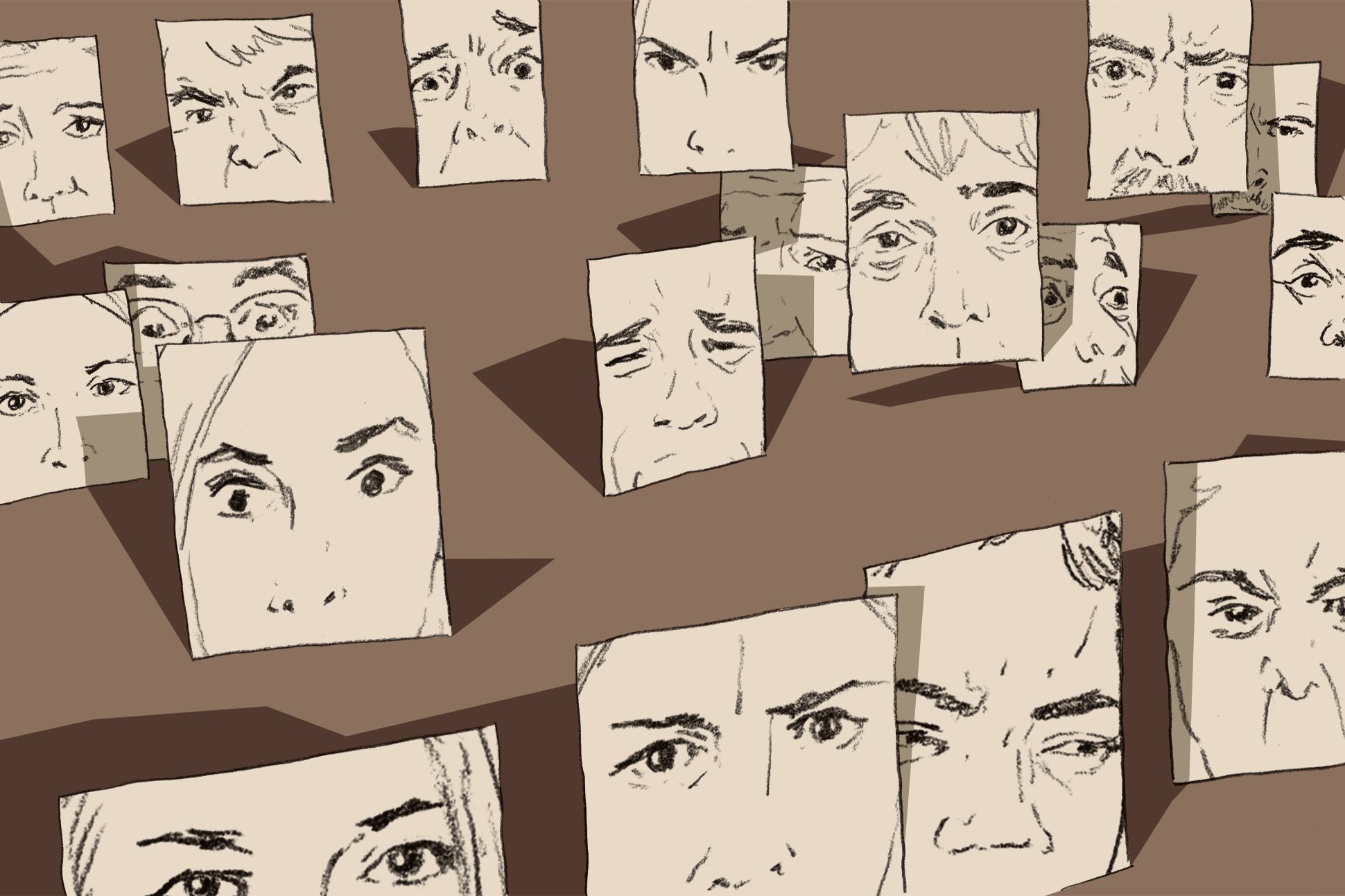
Art by Tim Bouckley.
Pain is at the core of nostalgia, a term that a Swiss medical student coined in 1688 to diagnose a manifest malady, a homesickness intense enough to dysregulate the heartbeats of mercenaries serving abroad. Some of us are especially prone to such acute symptoms, but all of us, at one time or another, have experienced nostalgia as a proper ache. And yet, that isn’t what makes nostalgia a hard feeling to write about. There is often a sweetness to nostalgia, a sugar coating that, left unchecked, thickens until it obscures the painful kernel. The longing for a past purified of its faults—or a past we never knew firsthand, encountered only on the page, on the screen, or in tales told to us before sleep or from a podium—becomes an indulgence. What makes nostalgia difficult to treat honestly in poems is how easily some of us fall under its spell.
I am a nostalgist. More susceptible to the pull of the past than many of those around me, I am also aware of my condition, even somewhat ashamed of it. This inner conflict—my attraction to the past, my effort to remind myself that the past is always a dream—has guided much of my work as a poet and translator. I suppose I could blame my personal history. Uprooted as a child from my native town of Odesa, Ukraine, thrust into an alien culture, I sought comfort in memories: of playing in the park with herds of cats and one terribly loyal stray dog as the sun set, while old men swapped inflated war stories over games of checkers and dominoes; of racing back from the water of the Black Sea to bite into incomparably flavorful tomatoes sprinkled with salt; of listening to my mother’s guests crack jokes in our warm, sweet-smelling kitchen. The memories grew ever cleaner, ever more pillowy in response to my needs.
Surely the experience of immigration reinforced my predilections, but some people are simply born looking backward. When the theologian Ronald Knox was four years old, he had trouble sleeping. He never made a fuss about it, just stayed in his room. A guest at the house asked what the boy did all night, and he replied, “I lie awake and think about the past.” That was me from the start, and that is me now. Many of my poems are born as phrases that come to me as I do what little Knox did.
I frequently conjure up, as a sobering slap, the image of Edwin Arlington Robinson’s Miniver Cheevy, the smalltown lush who “missed the mediæval grace/Of iron clothing,” who “thought, and thought, and thought,/And thought about” the storybook worlds of “Thebes and Camelot.” That fourth thought, coming after the line break, sent Robert Frost and Ezra Pound into a fit of laughter when they first read it. What a terrific dig at the paralysis of the nostalgic. Of course, they knew what kept Cheevy planted on that barstool as well as Robinson did. For all his talk of making it new, Pound was forever digging in the past, forever scorning the present, and, at his canniest moments, mocking himself for it. His Hugh Selwyn Mauberley—“out of key with his time,” striving “to resuscitate the dead art”—is as much a half- tender, half-devastating reflection of himself as Cheevy was of Robinson.
I love those two poems. It is better to satirize nostalgia, albeit sympathetically, than to swallow it whole. Yet satire isn’t the hardest approach to the subject. The boldest treatment of nostalgia I know belongs to Marina Tsvetaeva, who spent seventeen years in exile after the Russian Revolution. Her searing poem “Homesickness” (1934) begins, in my translation:
Homesickness! Silly fallacy
laid bare so long ago.
It’s all the same where I’m to be
entirely alone—
it’s all the same across what stones
I lug my shopping basket,
toward some house as alien
as a hospital or barracks.
“My native tongue,” the speaker pledges three stanzas later, “will not delude/me with its milky call,” and on she rages for another four stanzas, insisting on her freedom from longing until the very end:
Yes, every house is strange to me
and every temple—barren.
All, all the same. Yet, if I see,
alone along the verge—a rowan ...
Suddenly, the glimpse of the familiar bush in a foreign landscape destroys the speaker’s resistance. Without that closing admission, trailing off into a wordless reverie, her exquisite rant would have remained one-dimensional. Worse, it would have been dishonest. For even a “captive lion” like this speaker must, from time to time, yield to temptation. Tsvetaeva treats her subject as a hard feeling to be resisted with all one’s might. No surprise. The costs of succumbing to nostalgia’s lure were far greater for her than they were for Robinson. In 1939, she returned to the USSR, although she knew that nation was no longer the one whose destruction she had mourned from Paris. Two years later, hollowed out by the arrest of her husband and daughter, she took her own life.
Yet the stakes are not always so high. Harder still is the challenge of presenting the charm of nostalgia in all its sweetness while hinting at the bitter truth. No one met that challenge more masterfully than Donald Justice, to whom I turn for inspiration more regularly than to any other poet of his generation. Poetic temperaments align unpredictably. I, who came to Los Angeles as a refugee from the USSR in the early nineties, immediately recognized a sensibility I felt to be my own—my voice, my experience of the world—in Justice’s poems of his childhood in Depression-era Miami. One poem in particular, “Dance Lessons of the Thirties” (1988), showed me how to handle nostalgia with integrity. It begins:
Wafts of old incense mixed with Cuban coffee
Hung on the air; a fan turned; it was summer.
And (of the buried life) some last aroma
Still clung to the tumbled cushions of the sofa.
That sofa was “pushed back” during the lessons, recalls the speaker, and the dancers “managed always just to miss” it with their “last-second dips and twirls—all this/While the Victrola wound down gradually.” Everything in the lyric—from the casually varied pentameter (so much like a slow-moving fan), with its surprising yet gentle enjambments (so much like those dips and twirls in a cramped living room), to the perfectly chosen sensory details (the spicy scent in the sultry air, the soft cushions, the drawn-out strains of a record reaching its final rotation)—works to enchant. Like the mechanism of memory for us nostalgists, Justice’s composition smooths out the roughness of the past, elevating snatches of pleasure, suppressing what we would just as soon forget. Suppressing, yes, but not eliminating. Notice the “buried life,” buried in parentheses. These “little lost Bohemias of the suburbs,” as he calls them in the final line, are worlds of desperation, of poverty barely hanging on to gentility. The “brave ladies who taught us/So much of art, and stepped off to their doom/Demonstrating the foxtrot with their daughters” in the depths of the Depression suffer an “exile” less dramatic than that of Tsvetaeva, but no less poignant. Justice dignifies them by not dwelling on their pain, but neither does he deny it. He leaves the sugar coating in place, with only a crack here and there revealing the kernel. Surely, they would have wanted it that way.
This essay is part of “Hard Feelings,” an essay series of poets writing about ugly emotions.
Boris Dralyuk is the author of My Hollywood and Other Poems (Paul Dry, 2022). He teaches at the University of Tulsa and is editor-in-chief of Nimrod.